
If you’re building cabinets, doors, tables, or furniture, you’ve probably hit the same question every woodworker hits sooner or later:
Do I need a drill press, a mortiser machine, or both?
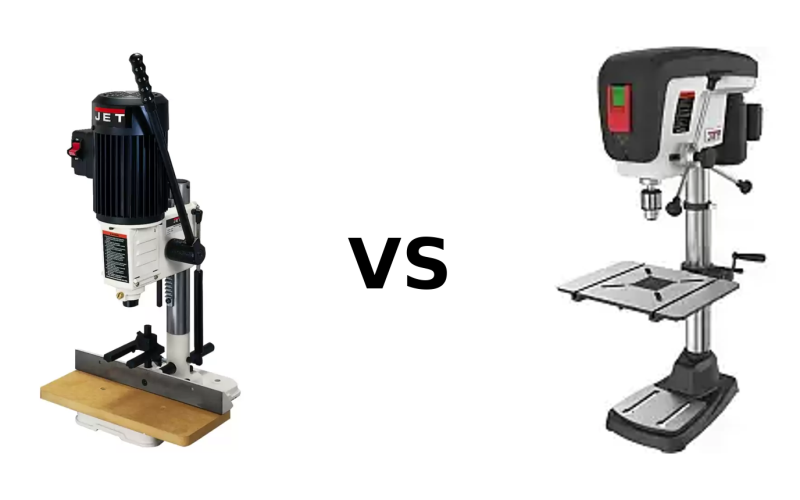
A drill press is built for accurate, repeatable vertical drilling. A mortiser machine is built to cut clean, consistent mortises for mortise and tenon joinery, fast.
They look similar. They both push a cutting tool straight down. And yes, you can use a drill press for mortising in a pinch, which is why so many shops debate this exact comparison in forums and woodworking communities.
By the end, you’ll know which one makes sense for your shop.
Drill Press vs Mortiser Machine Comparison Table
| Feature | Drill Press | Mortiser Machine |
|---|---|---|
| Primary Purpose | Accurate drilling | Mortise and tenon joinery |
| Best For | Hardware holes, dowels, jigs | Mortises in doors, frames, furniture |
| Tooling | Twist, brad point, Forstner bits | Hollow chisel + auger bit |
| Speed | Fast for holes | Fast for mortises |
| Mortise Quality | “Good enough” with cleanup | Clean, consistent mortises |
| Repeatability | Great for holes | Great for joinery production |
| Workholding | Requires jigs/clamps | Fence + hold-down built in |
| Learning Curve | Easy | Moderate |
| Typical Cost | Often lower | Often higher (but faster ROI for joinery) |
Quick Answer: Drill Press vs Mortiser (Fast Decision)
Choose a drill press if…
- You need a versatile shop machine for holes, hardware, dowels, Forstner bit work, and jigs
- You’re doing mostly cabinet and fixture work, not heavy joinery
- You want the best “first machine” value for your budget and space
Choose a mortiser machine if…
- You cut mortise and tenon joints regularly (doors, tables, frames)
- You want faster joinery with cleaner results and less cleanup
- You care about repeatability and production workflow
Consider owning both if…
- You’re a serious hobbyist or pro shop that does hardware drilling + real joinery
- You want to stop wasting time switching setups, fighting workholding, and hand-cleaning mortises
What Is a Drill Press?
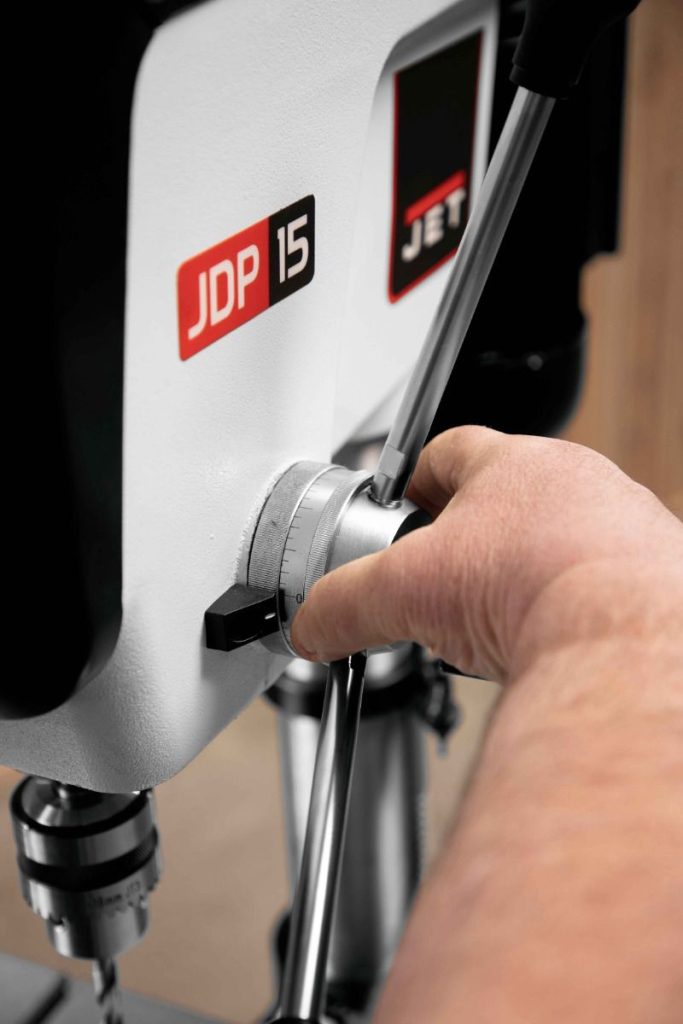
A drill press is a stationary machine designed for accurate vertical drilling. Unlike a handheld drill, a drill press gives you:
- A stable quill and spindle
- Controlled feed pressure
- Adjustable speed
- Better repeatability with stops, fences, and jigs
What a Drill Press is Best At
A quality drill press shines for:
- Hardware holes (knobs, pulls, mounting screws)
- Dowels and joinery jig drilling
- Forstner bit boring (clean flat-bottom holes)
- Countersinks and counterbores
- Shelf pin holes (with the right jig/fence)
- General drilling where accuracy matters
Why Drill Presses are so Popular in Woodworking Shops
Because they’re versatile. If you only buy one machine first, a drill press often earns its keep fast. That’s a big reason why so many woodworkers recommend starting with a drill press when budget and space are tight.
What Is a Mortiser Machine?
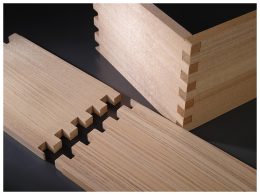
A mortiser machine is built specifically to cut mortises, which are the rectangular slots that accept a tenon in classic mortise and tenon joinery.
If you build:
- Cabinet doors
- Entry doors
- Tables
- Chairs
- Frames
- Furniture bases
…you’re in mortise territory.
Common Mortiser Types (Quick Overview)
There are a few styles, but the most common is the:
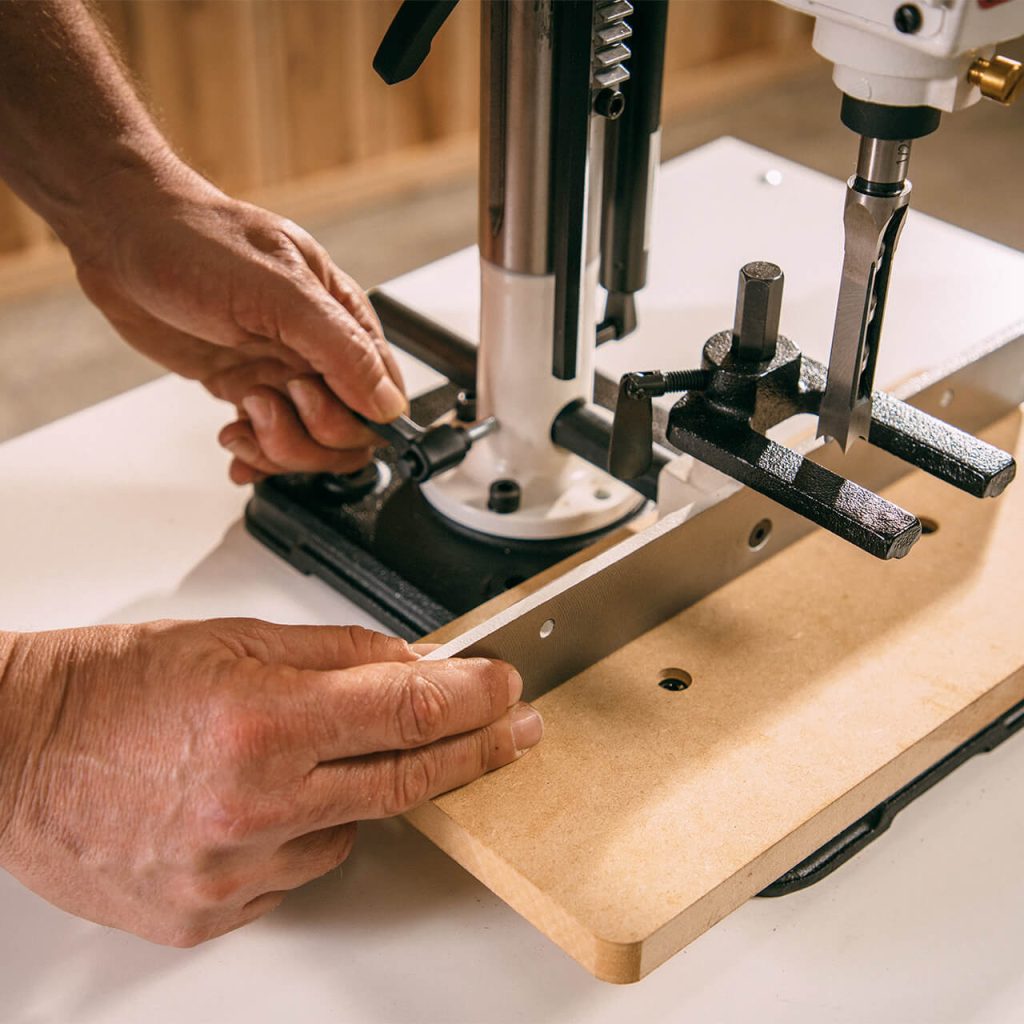
Hollow chisel mortiser
It uses a two-part cutting system:
- An auger bit inside (removes most of the waste)
- A square hollow chisel outside (shears the mortise walls and corners)
What “Square Mortise” Means in Real Life
It does not mean you’re drilling a square hole like magic.
It means the machine cuts a mortise with:
- Flat walls
- Square corners (or close enough to require minimal cleanup)
- Consistent width and depth across repeated cuts
That’s what makes mortisers a true woodworking joinery machine, not just a drilling tool.
The Real Mechanical Differences (What Changes the Results)
This is where the drill press vs mortiser debate gets settled.
Cutting Action + Tooling
Drill press: twist bits, brad points, Forstner bits (built for clean, accurate round holes).
Mortiser: hollow chisel + auger (built for fast, clean rectangular mortises with better walls and corners).
Bottom line: A drill press can remove material, but it’s not designed to leave a clean mortise. A mortiser is.
Workholding + Control
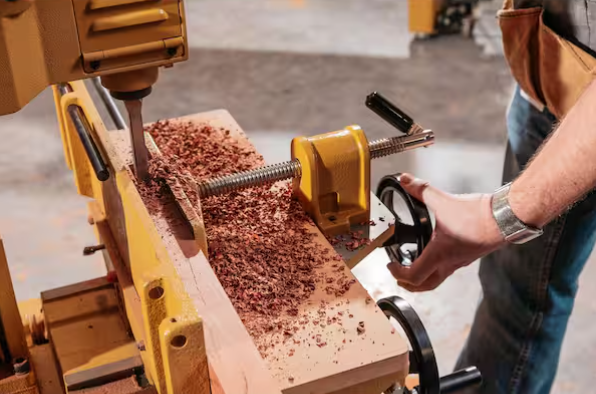
Mortising creates side pressure, so the work wants to shift. Mortisers are built with fences, hold-downs, stops, and better plunge control for repeatable results. Drill presses can do it with jigs and clamps, but it’s usually slower and fussier.
Accuracy + Repeatability
Drill press: great for hole location, depth, and straight drilling.
Mortiser: great for consistent mortise placement, width, depth, and repeatable joinery.
Real shop logic: it’s not just accuracy, it’s speed and consistency.
Can You Mortise With a Drill Press?
Yes, especially early on.
What works:
- Drill out waste (often with a Forstner bit)
- Clean up with a chisel
- Square corners by hand if needed
Best for: occasional mortises and one-off builds.
Where it falls short: speed, clean walls, square corners, and repeatability. Common issues include bit wander, burning, workholding problems, and extra cleanup.
If you’re cutting mortises often, that’s usually when a dedicated mortiser starts making sense.
When a Drill Press Is the Right Choice
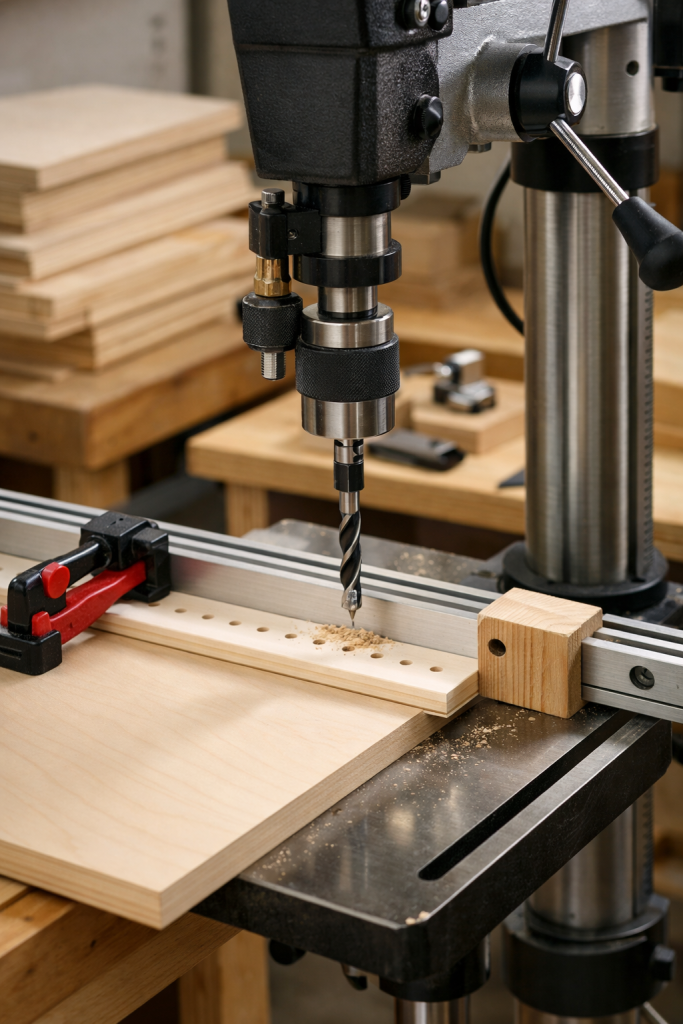
A drill press is the right choice when your shop needs a versatile “do-it-all” machine for drilling tasks.
Choose a drill press if you regularly do:
- Shelf pin holes
- Hardware installation holes
- Boring hinge cup holes (with the right bit and setup)
- Dowels and jig drilling
- General drilling for fixtures, shop projects, and woodworking builds
Why Drill Presses are a Great Value
If you’re a small shop, a drill press can support:
- Cabinet installs
- Casework production
- Fixture building
- Repeatable hole patterns
It’s one of those machines you’ll keep using even after you add more specialized equipment.
When a Mortiser Machine Is the Better Choice
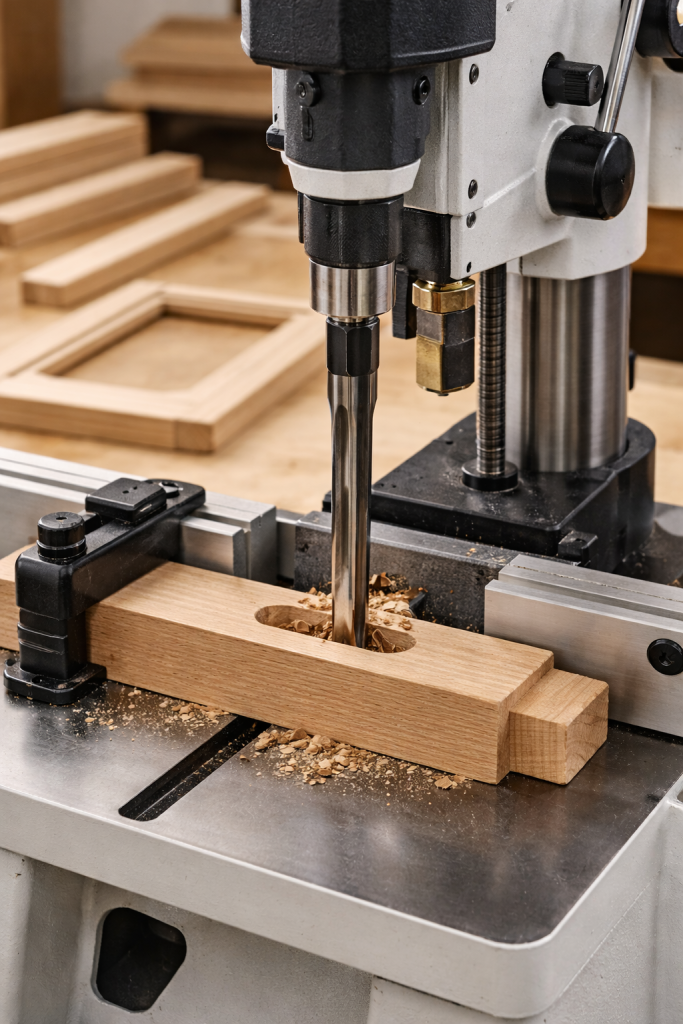
If mortise and tenon joinery is part of your regular workflow, a mortiser is the smarter tool.
Choose a mortiser machine if you build:
- Mortise-and-tenon doors
- Table legs and aprons
- Frame construction
- Repetitive joinery in furniture or millwork
Why Mortisers Win in Real Shops
A mortiser is built to:
- Cut mortises faster
- Hold workpieces more securely
- Reduce hand cleanup time
- Improve joint fit and consistency
If you’re cutting mortises weekly (or daily), a mortiser pays you back in time saved.
Final Takeaway: Drill Press vs Mortiser Machine
If you mostly drill holes for hardware, dowels, jigs, and general woodworking, buy a drill press first.
If you build doors, tables, frames, and furniture with mortise and tenon joinery, a mortiser machine will save time and improve your results.
And if you’re serious about efficiency and repeatability, owning both is the long-term win.
Need help choosing the right machine for your shop? Contact Wurth Machinery for recommendations.