

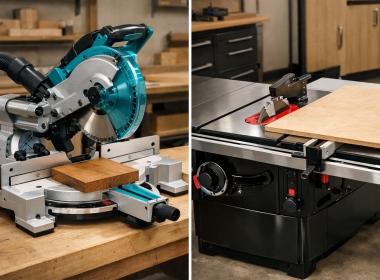
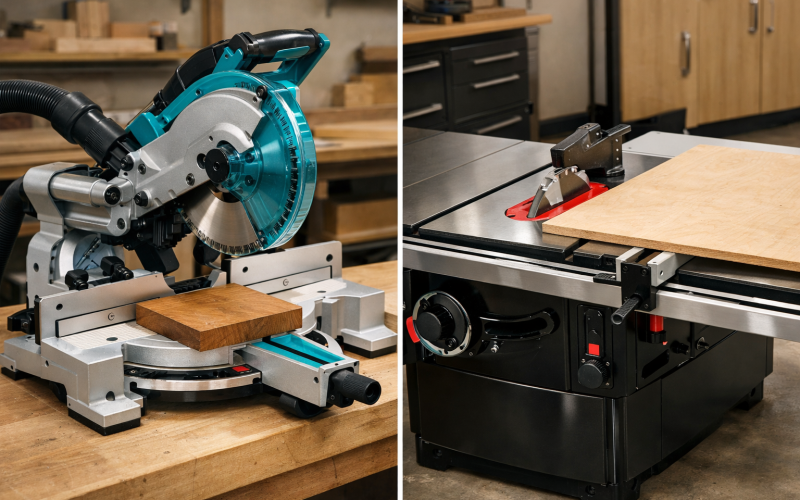
The main difference between a miter saw and a table saw is how they cut and what they are built to do.
A miter saw brings a spinning blade down onto a stationary board to make fast, repeatable crosscuts and angles.
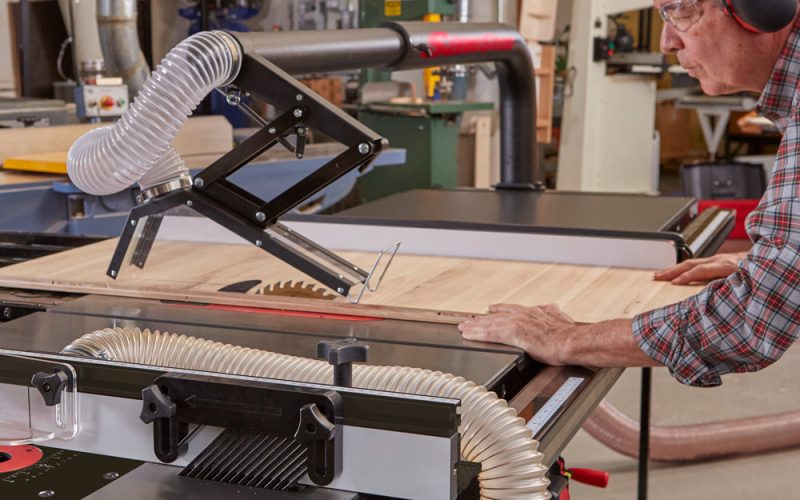
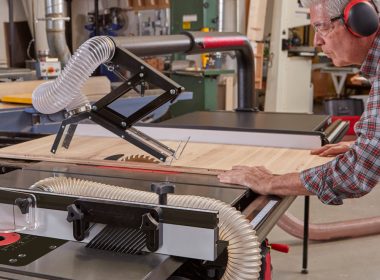
A table saw pushes wood through a stationary blade, making it the go-to machine for ripping long boards and breaking down large panels.
If your work involves precise angles and trim, a miter saw leads. If your work involves straight cuts, joinery, and sheet goods, a table saw wins.
Quick Skim: Miter Saw vs Table Saw
| Decision Point | Miter Saw | Table Saw |
|---|---|---|
| Best for | Angled crosscuts | Long straight cuts |
| Typical work | Trim, framing, molding | Cabinets, furniture, plywood |
| Accuracy for angles | Excellent | Good with jigs |
| Cutting capacity | Smaller boards | Wide boards and sheets |
| Portability | Highly portable | Mostly stationary |
| Beginner friendly | Easier to learn | Steeper learning curve |
What a Miter Saw Does Best
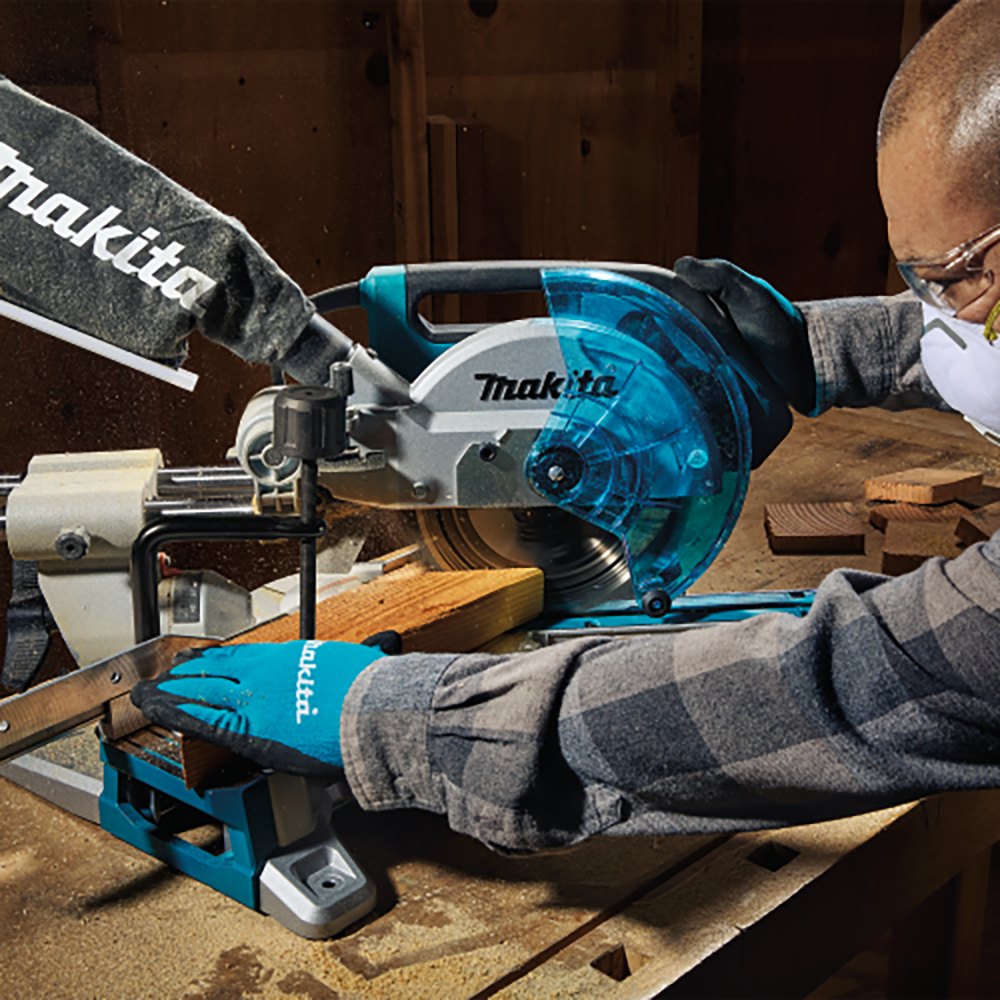
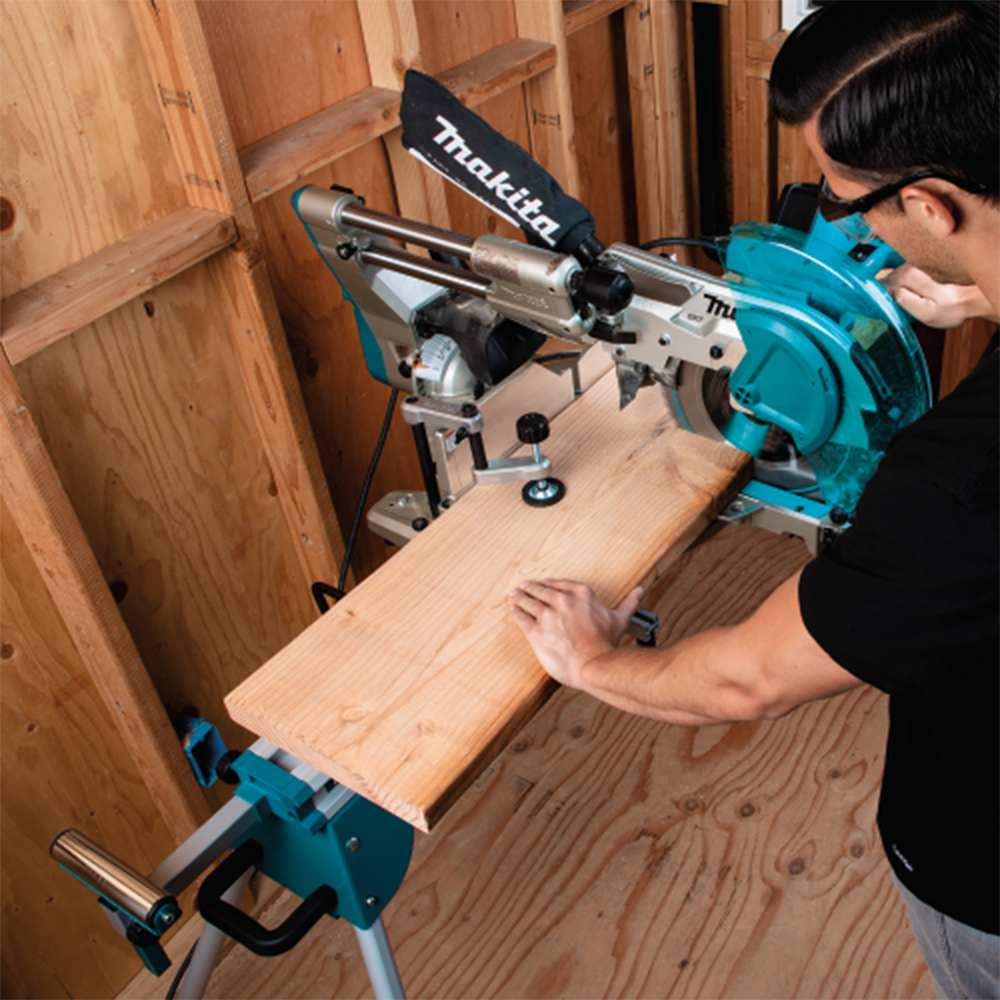
Miter saws are purpose-built for crosscutting. The blade drops vertically or at an angle onto the workpiece, which stays fixed against a fence. This design delivers consistent, square cuts with minimal setup.
They shine in finish carpentry and jobsite work. Cutting baseboard, casing, crown molding, deck boards, and picture frames all fall naturally into a miter saw’s wheelhouse. Modern sliding miter saws can handle wider boards while maintaining clean, accurate cuts.
Portability is a major advantage. Most models are compact, relatively light, and easy to mount on a folding stand. For contractors and mobile woodworkers, this matters.
Beginners also tend to feel more comfortable with a miter saw. The cut path is visible, the board is clamped or held against a fence, and kickback risk is lower than with rip cuts on a table saw.
What a Table Saw Does Best
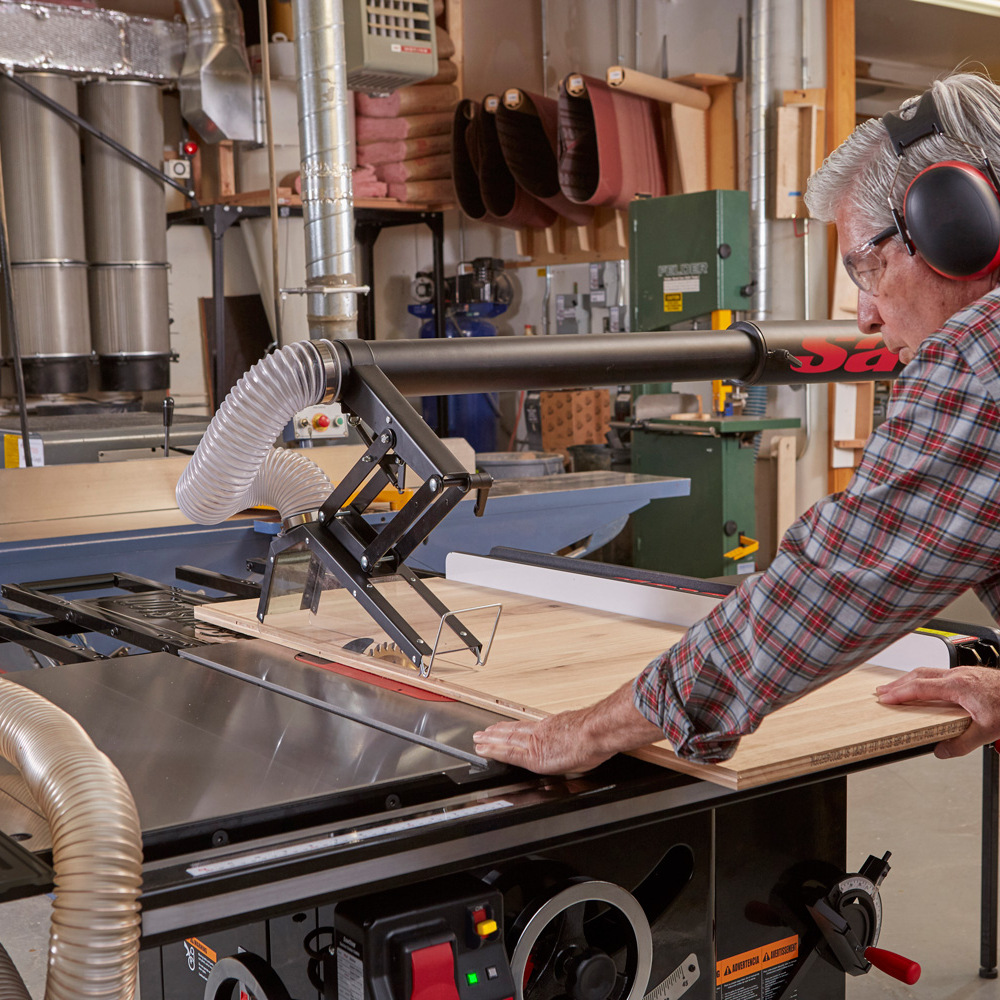
A table saw is the most versatile machine in many shops. Its strength is ripping, cutting boards lengthwise with precision and repeatability. This makes it essential for cabinetmaking, furniture building, and millwork.
Table saws handle material that a miter saw cannot. Full sheets of plywood, long hardwood boards, and wide panels move easily across the table surface with the right support.
With the right jigs and blades, a table saw can perform far more than straight cuts. Dados, rabbets, bevels, and precise joinery all become possible. This versatility is why many professionals consider the table saw the heart of the shop.
The tradeoff is safety and learning curve. Rip cuts require strict technique, proper guards, and push tools. Kickback is a real risk if the wood binds against the blade. For that reason, training, focus, and proper setup are critical.
Precision and Repeatability
For angled crosscuts, the miter saw is typically more accurate out of the box. Detents at common angles, solid fences, and a controlled blade drop make repeat cuts simple.
A table saw can match or exceed this accuracy with good sleds, miter gauges, and setup, but it requires more time and accessories. The payoff is broader capability once dialed in.
Capacity and Scale of Work
If you work with large material, the table saw is usually the better choice. Its cutting capacity supports wider boards and full sheets, especially when paired with outfeed tables or panel supports.
A miter saw is limited by its blade diameter and fence width. Sliding models expand capacity, but they still cannot process sheet goods the way a table saw can.
Portability Versus Permanence
Jobsite carpenters lean toward miter saws because they travel well. Cabinet shops and dedicated woodworking spaces lean toward table saws because they stay put and anchor a workflow.
Many shops eventually use both. The miter saw handles trim and angles. The table saw handles ripping, sizing, and joinery.
Safety Considerations
Miter saws are generally less intimidating. The cut is controlled, the blade comes down and retracts, and the workpiece is stable.
Table saws demand more respect. Proper blade height, riving knives, guards, and push sticks reduce risk. New users should invest time in learning correct technique before tackling complex cuts.
Which Should You Buy First?
Choose a miter saw if:
You focus on framing, decks, flooring, trim, or finish carpentry. You need fast, accurate angle cuts and portability.
Choose a table saw if:
You build cabinets, furniture, or custom projects. You regularly rip lumber or break down plywood.
For beginners:
If your priority is ease of use and immediate results on trim work, start with a miter saw. If your goal is long-term versatility and woodworking skill development, start with a table saw.
Final Takeaway: Miter Saw vs Table Saw
A miter saw is faster and more accurate for angled crosscuts on smaller stock. A table saw is more versatile and better suited for ripping, joinery, and large panels. Many serious woodworkers eventually own both, using each tool for what it does best.